This summer of 2026, as the high-risk provisions of the European AI Act enter into application and imitator statutes multiply from Brasília to Seoul, a new clerisy has taken its place upon the world stage. Its members do not wear cassocks but lanyards; its councils are not synods but "multistakeholder forums"; its scriptures are impact assessments and model cards. The project they announce — the global governance of artificial intelligence — is presented to the public as a neutral technical necessity, as inevitable and as innocent as the standardization of railway gauges. But the discerning observer, trained to read the architecture of power beneath the vocabulary of expertise, will recognize something far older and far graver: the latest and perhaps final campaign in the long war of legal positivism against the natural law, waged this time not through parliaments and faculties but through compliance regimes written into the very machinery of daily life.
Let us be precise, for precision is charity toward the truth. The dangers of these systems are real, and no serious Catholic disputes that the works of human hands must be ordered to the good. The Church herself, in her recent reflections on the anthropological questions posed by machine intelligence, has warned against the idolatry of the artifact and the delegation of judgment to that which cannot judge. The question before the nations, therefore, is not whether artificial intelligence should be governed — of course it must be — but by whom, at what altitude, and above all by what standard. And it is precisely here that the emerging edifice reveals its true character. The UN advisory bodies, the digital compacts, the OECD frameworks, the Brussels regulations dutifully transposed by client legislatures on four continents: all of them locate authority not in the sovereign community under God, but in a floating stratum of technocrats, consultancies, and corporate foundations that no electorate has chosen and no citizen can dismiss.
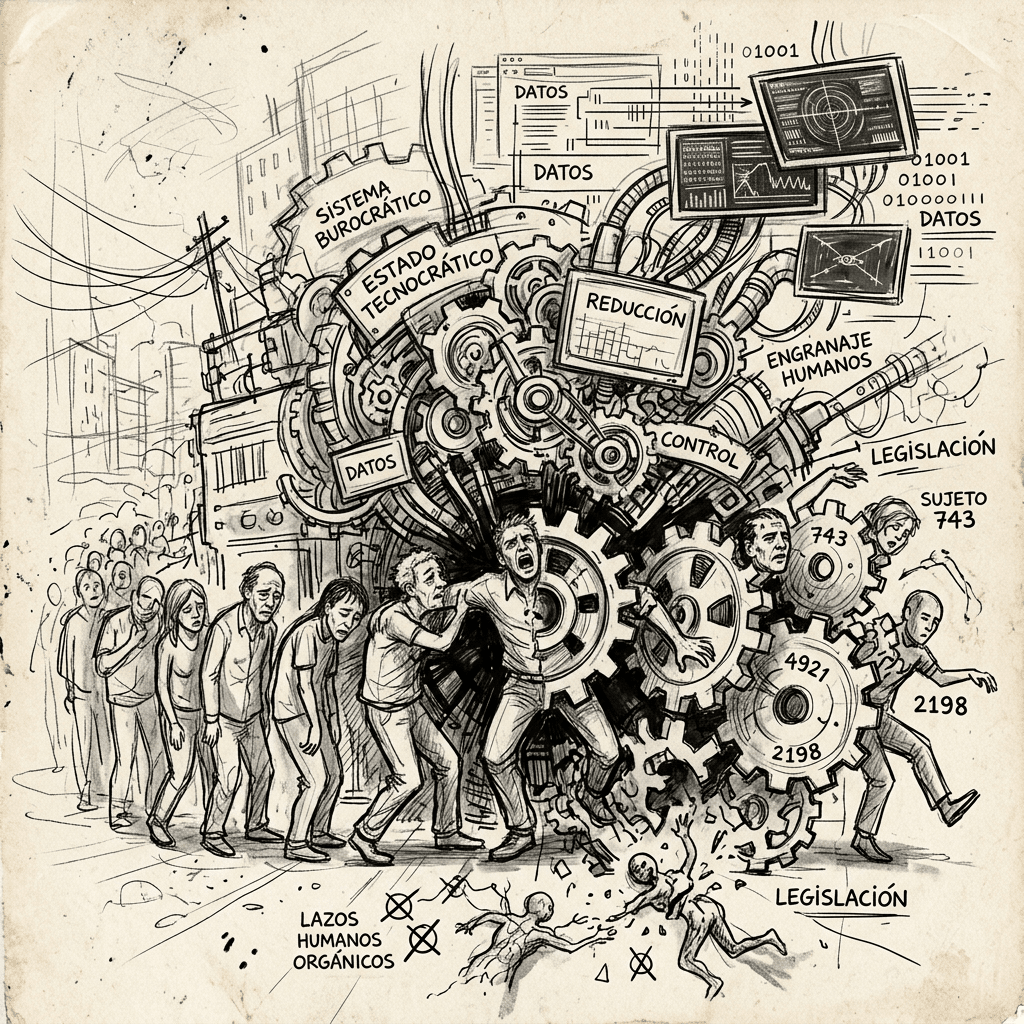
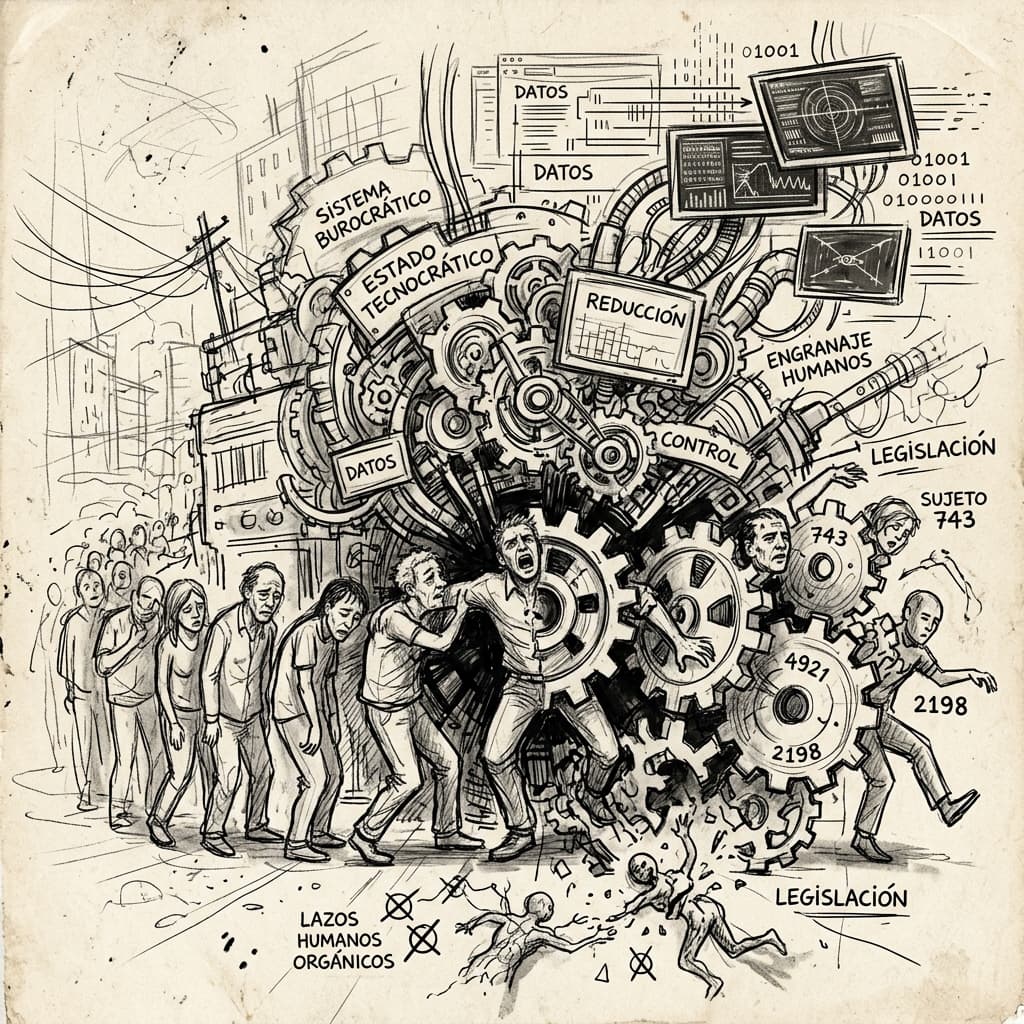
Consider the mechanism by which this expropriation proceeds. A national parliament, told that the technology is too complex and too borderless for mere national law, adopts a "framework" whose substantive content is delegated to standards bodies, harmonization committees, and expert panels convened elsewhere. The framework, in turn, defers to "international best practice," which is manufactured in multistakeholder forums where states sit as merely one voice among platform corporations, philanthropic vehicles, and self-appointed civil society. The circle closes: the nation retains the ceremony of legislation while the substance of the rule — what may be built, what may be said, how a child may be taught, how a worker may be judged — is decided in rooms whose occupants answer to their peers and their funders. Multistakeholderism, celebrated as inclusion, is in reality the perfection of unaccountability: when everyone is at the table, no one is responsible for what is served.
Yet the constitutional fraud, grave as it is, conceals a deeper and stranger error. The entire edifice of "AI ethics" — the alignment charters, the value statements, the fairness metrics baked into audit schedules — rests upon the premise that morality is a specification: a finite set of constraints that can be enumerated, encoded, and enforced by procedure. This is not a new philosophy wearing new clothes; it is the oldest error of modernity brought to its logical terminus. Positivism began by severing law from the natural law, reducing right to the command of the sovereign; it ends by severing judgment from the person, reducing conscience to the output of the system. Where Kelsen dreamed of a pure norm without metaphysics, the technocrat now delivers a pure algorithm without a judge. Law without a lawgiver above it becomes force; code without a conscience behind it becomes fate.
Against this, moral realism states what every generation before our own understood without effort: responsibility presupposes freedom, freedom presupposes intellect and will, and intellect and will belong to persons — never to artifacts. A machine cannot sin, cannot repent, cannot be punished, cannot answer at any tribunal, temporal or eternal. When the administrator shrugs that "the system decided" — that the loan was denied, the visa refused, the ward removed, the sentence lengthened by the model — responsibility has not disappeared into the silicon. It has been laundered through it. The much-lamented "accountability gap" of artificial intelligence is not an engineering problem awaiting a cleverer audit trail; it is an ontological fact, and the refusal to acknowledge it is not naivety but strategy. A power that acts through an unanswerable instrument is a power that has made itself unanswerable.
The casualties of this arrangement are the two societies that the natural order establishes prior to any state: the nation and the family. Subsidiarity teaches that judgment belongs first to those closest to the reality judged — the father and mother over the formation of their children, the local community over its common life, the nation over its laws. The algorithmic regime inverts the pyramid. The decisions that most intimately shape a household — what its children see and are taught, how its labor is measured, whether its speech circulates or is quietly suppressed — ascend to model weights trained on oceans of expropriated experience and certified by foreign auditors, while the family is left with a settings menu. This is not governance but tutelage, and tutelage of a peculiarly intimate kind, for it does not command the body as the old despotisms did; it curates the premises of thought.
What, then, is to be done? Not the Luddite gesture, which mistakes the instrument for the enemy, but the restoration of right order. Nations must legislate on these systems as sovereign communities — prudently, and in genuine cooperation where cooperation serves — but receiving their standard from the moral law that precedes all charters, not from the compliance matrices of an unaccountable stratum. Machines must remain what they are: instruments, answerable through the persons who deploy them, with every consequential judgment traceable to a name that can be summoned and held to account. And the formation of conscience must be reclaimed by those to whom God entrusted it — the family, the parish, the school that still believes truth exists. The alternative is now visible to anyone who will look: a world in which the last word belongs to a procedure, which is to say, to whoever writes it. Conscience cannot be governed by code, but it can be starved by it; and a civilization that accepts the substitution will discover, too late, that it has not abolished moral authority but merely enthroned an idol in its seat.